About
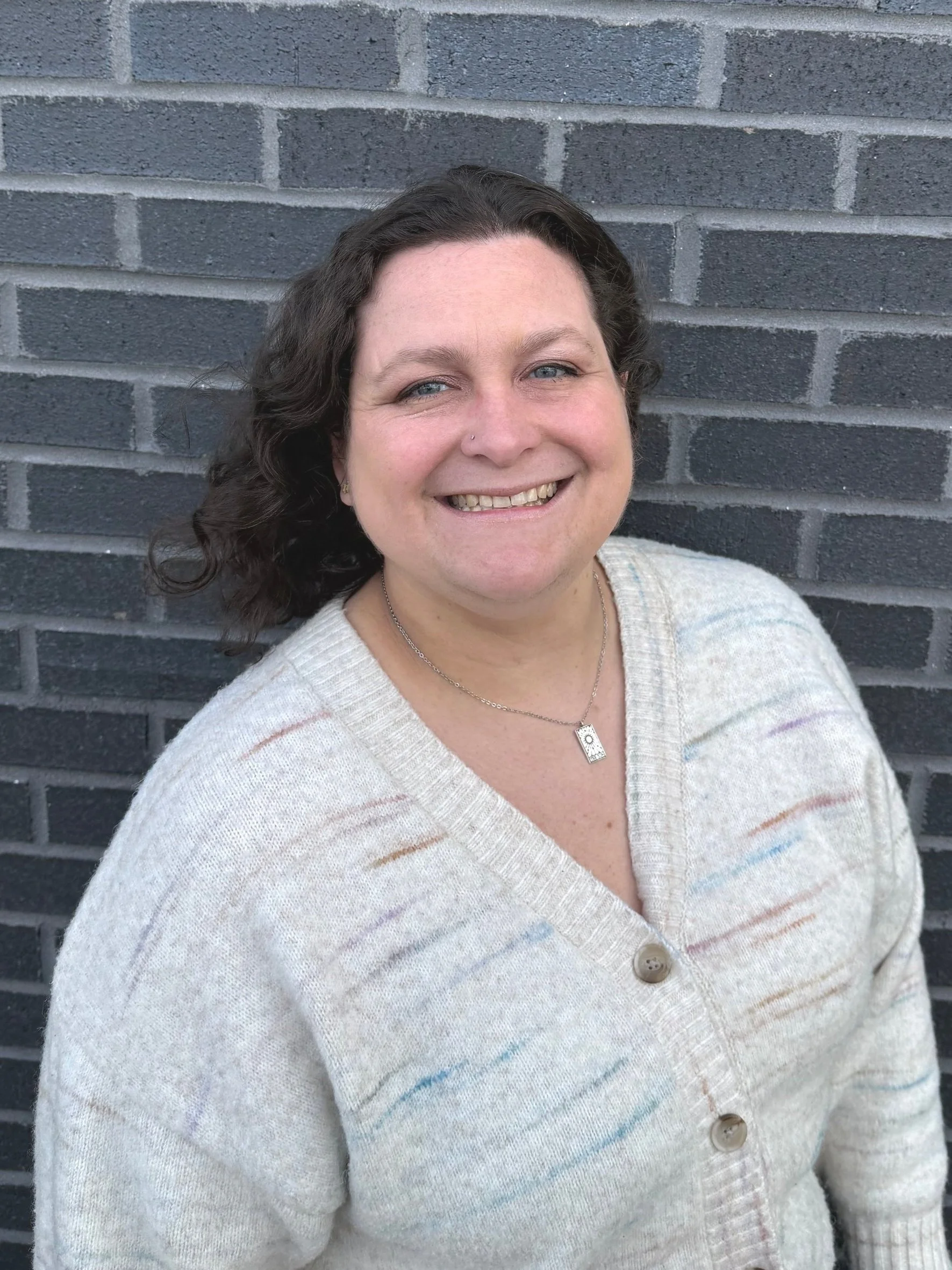
Hi! I’m Rachel (She/Her). You can call me Dr. Gustafson if you’re feeling especially formal but good luck pronouncing my long Swedish last name. Anyway, I’m glad you’re here. Whatever’s bringing you to therapy—big feelings, identity stuff, existential spirals—it is all welcome. I know therapy can feel intimidating or awkward at first, especially if you’re used to holding things on your own. We’ll make space for all of it: rage, joy, grief, confusion, goofiness, awkwardness, and everything in between. And if you’re a misfit, weirdo, deep feeler, or silly goose—same. Let’s talk.
I primarily conduct therapy using Acceptance and Commitment therapy (ACT), which is focused on learning to live a meaningful life—even when things feel messy, uncertain, or chaotic. Knowing that we're only able to change so many of life's circumstances, the goal of ACT is to increase a person's psychological flexibility, which is another way of saying "finding new ways to adapt and grow even when life sucks." Within this, ACT includes six core processes of mindfulness, acceptance, committed action, values, self as context, and cognitive defusion. If I get too much into this stuff, I start to really nerd out, so I'll stop myself here. What you do need to know, is that I see therapy as a collaborative process in which we work to identify factors that are out of your control, cope with the ones that aren't, and figure out what will make your life meaningful for you. Sprinkled in with all of this, I often use elements of Cognitive Behavioral Therapy, Interpersonal Process, Humanistic Therapy, or Relational-Cultural Therapy.
I identify as a white, cisgender, queer, (mostly) able-bodied, neurodivergent female, and my own identities and life experiences greatly influence the way I show up in my personal life and my professional work. I am committed to the ongoing work of becoming antiracist and understanding my role in creating systemic change for folks with marginalized identities. I highly value being authentic and genuine in all my interactions with other humans, and I invite and encourage my clients to do the same. I firmly believe that showing up authentically to the therapeutic space allows opportunity for optimal acceptance and healing. I enjoy working with clients who have similar identities to mine as much as I enjoy working with clients from various backgrounds. To me, the key piece is willingness to show up as you are.
-
I consider myself a generalist in my practice and have competence working with a wide variety of concerns. I have keen interest and expertise working with these presenting concerns:
Trauma
Depression and anxiety
Perfectionists & high achievers
LGBTQ+ identities
Gender identities
Existentialism and Spirituality
Neurodivergent identities
Suicidal ideation/self-harm thoughts/feelings
-
I earned my Bachelor's degree in Psychology with a Minor in Sociology from Calvin University, my Master's degree in Professional Psychology from William James College, and my PsyD in Clinical Psychology from William James College. I was initially drawn to this field by the opportunity to form unique relationships with folks navigating life's various challenges. As I continue my career, this is is what keeps me passionate about the work that I do.
Before entering private practice, my professional work was focused within the University Counseling setting, where I was able to provide individual therapy, group therapy, crisis services, outreach, and graduate level supervision and training. While most of my clinical work has been with adolescents and young adults, I have served clients of various ages and am currently able to provide individual services to people ages 16+.
Prior to completing my Psyd, I completed advanced trainings at residential, community health, University Counseling, and elementary school settings. I completed my APA- Accredited Doctoral Internship at the University of South Carolina Counseling and Psychiatric Services.
-
When I'm not at work, you can find me exploring metro Atlanta with family or friends, repotting my extensive houseplant collection, playing The Sims, talking someone's ear off about the latest Taylor Swift happenings, making music (mainly vocal, piano, or viola), or doing something creative.
I have three orange pets and I am happy to tell you more about them. Boji is the best dog in the world and looks like a stretched out Corgi. Ham (aka cat number 1) is the smallest guy in the world and a perfect angel. Cheddar (aka cat number 2) is more of an agent of chaos, but we love him nonetheless.
Favorite Color: Seafoam green
Favorite Reality TV show: Survivor
Astrological sign: Libra
Favorite Seltzer Brand: Spindrift
Favorite Animated Film: Shrek
We may be a good fit if:
You are looking for a therapist who has a relaxed, casual, and authentic style while still holding the upmost respect for professional boundaries and ethics
You want therapy to feel comfortable and light- but you also need a therapist who is willing to push you to explore more uncomfortable emotions
You don't want someone to tell you what to do; you'd rather have a space to build your own confidence in your self and your decision making abilities with a supportive presence
You have tried to "think" your way out of your emotions but find yourself stuck in uncomfortable patterns
You're not looking for a quick fix, and are dedicated to the time in and outside of therapy to understand and care for your whole self
You want a therapist that wants to know about every part of you- whatever makes you unique or makes you feel most alive - these are most welcome in our space!